

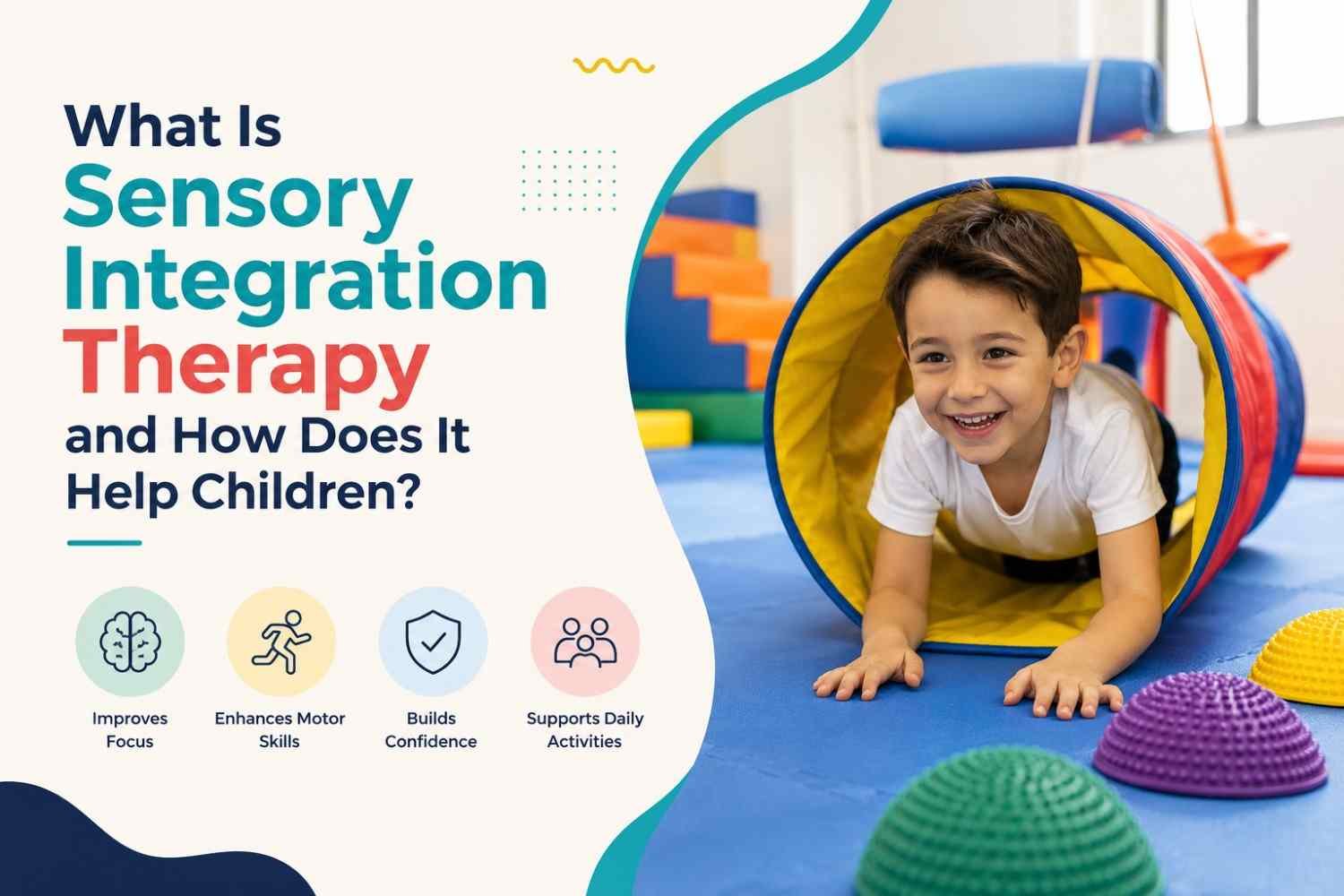
Children experience the world through their senses every day. Sounds, lights, textures, movement, smells, and touch all provide information that helps them understand and respond to their surroundings. However, some children may find it difficult to process or respond appropriately to this sensory information. They may become overwhelmed by loud sounds, avoid certain textures, dislike being touched, or struggle with balance and coordination.
Sensory Integration Therapy for Children is designed to help children process sensory information more effectively and participate more comfortably in everyday activities. At Ekam Child Development Centre, therapy can be tailored to a child’s individual sensory needs, abilities, and developmental goals.
What Is Sensory Integration Therapy for Children?
Sensory Integration Therapy for Children is a therapeutic approach that uses carefully planned sensory experiences to help children respond more appropriately to information received through their senses. These experiences may involve movement, touch, balance, body awareness, visual input, and other sensory activities.
The aim is not simply to expose a child to different sensations. Instead, a therapist creates structured activities based on the child’s specific needs and observes how the child responds. Over time, these activities may support better sensory processing, body awareness, coordination, attention, and participation in daily routines.
What Are Sensory Processing Difficulties?
Some children have difficulty organizing and responding to sensory information. These sensory processing difficulties can affect how a child behaves, learns, plays, communicates, or participates in everyday activities.
For example, a child may:
- Become distressed by loud or unexpected sounds
- Avoid certain clothing, foods, or textures
- Seek constant movement or physical stimulation
- Have difficulty sitting still or staying focused
- Appear uncomfortable with certain types of touch
- Struggle with balance, coordination, or body awareness
- Become overwhelmed in busy environments
- Have difficulty transitioning between activities
These signs can vary considerably from one child to another. A professional assessment can help determine whether sensory challenges may be contributing to difficulties in everyday life.
How Does Sensory Integration Therapy Work?
During Sensory Integration Therapy for Children, therapists use purposeful activities to provide sensory input in a controlled and supportive environment. Activities are selected according to the child’s individual requirements rather than following a one-size-fits-all approach.
A session may include activities involving:
- Swinging and controlled movement
- Balance and coordination exercises
- Climbing or obstacle courses
- Tactile exploration
- Proprioceptive activities
- Activities that encourage body awareness
- Fine and gross motor activities
These experiences may help children learn to organize sensory information and respond to it more effectively. The therapist gradually adjusts activities according to the child’s responses and progress.
What Are the Benefits of Sensory Therapy for Children?
The potential benefits of sensory therapy for children depend on their individual needs and therapy goals. When appropriately planned and integrated into a broader developmental program, sensory-based activities may support several areas of functioning.
1. Better Attention and Participation
Children may find it difficult to keep their attention because they are overwhelmed or require an excessive amount of stimulation. Structured sensory activities can assist them in preparing to take part in play, learning, and other activities.
2. Improved Body Awareness
The activities that focus on movement or resistance, as well as balance, can teach children to know how their body’s position is in relation to how and where it is moving. This helps with coordination throughout everyday activities.
3. Improved Motor Skills
Sensory experiences can be integrated into gross and fine motor exercises. Children can practice reaching or grasping, climbing, balance, and coordinated movements in a stimulating environment.
4. Greater Comfort With Everyday Sensations
A structured and well-structured therapy environment will help children learn reactions to certain sensory experiences. This could make some daily activities more manageable.
5. Improved Daily Participation
The goal is to ensure active participation in daily life. Based on the child’s requirements, therapy can support various activities like eating, dressing, and playing, participation in the classroom, and following routines.
What Are Sensory Integration Activities?
Sensory integration activities are structured experiences designed to provide specific types of sensory input. Examples may include swinging, jumping, pushing or pulling objects, playing with different textures, balancing, crawling, and navigating age-appropriate obstacle courses.
Importantly, activities should be selected according to the child’s individual sensory profile and developmental goals. Activities that are appropriate for one child may not be suitable for another, which is why professional guidance can be valuable.
Who May Benefit From Sensory Integration Therapy?
Children experiencing sensory processing challenges may benefit from an individualized therapeutic assessment. Sensory difficulties can occur alongside various developmental or learning challenges, but having a particular diagnosis does not automatically mean that every child needs sensory integration therapy.
A qualified professional can consider the child’s behavior, sensory responses, motor abilities, communication, daily routines, and functional needs before recommending an appropriate intervention.
What Role Does Occupational Therapy Play?
Occupational therapy for sensory issues focuses on helping children participate more effectively in meaningful daily activities. An occupational therapist may assess sensory responses and functional skills and develop activities that address areas such as coordination, self-care, play, classroom participation, and motor development.
Sensory-based strategies may therefore be incorporated into a broader occupational therapy plan when they are appropriate for the child’s needs.
How Does Ekam Child Development Centre Support Children?
The staff at Ekam Child Development Centre the primary focus of knowing the child’s individual developmental and sensory requirements. A tailored approach can assist in identifying areas that could affect participation and help determine the most appropriate goals for therapy.
Parents also have crucial roles by providing observations regarding their child’s behaviour at school, home, as well as in other settings. Regular communications between therapists and parents will keep therapy focused on real-world goals.
If you are looking for Sensory Integration Therapy in Dwarka, professional guidance can help you understand your child’s sensory needs and explore suitable therapy options. Parents searching for a Sensory Integration therapist in Dwarka can consider a centre that emphasizes individualized assessment, child-friendly activities, and regular progress monitoring.
Conclusion
Sensory challenges can affect how children interact with people, environments, learning activities, and everyday routines. Sensory Integration Therapy for Children provides structured and individualized sensory experiences that may help support sensory processing, motor development, attention, body awareness, and daily participation.
An appropriate assessment, personal goals, as well as guidance from professionals and involvement from parents can help children receive assistance that is appropriate to their specific requirements. If there are any concerns regarding the reactions to sensory stimuli or the involvement of children in everyday activities, consulting with the appropriate therapist may be an initial step.