

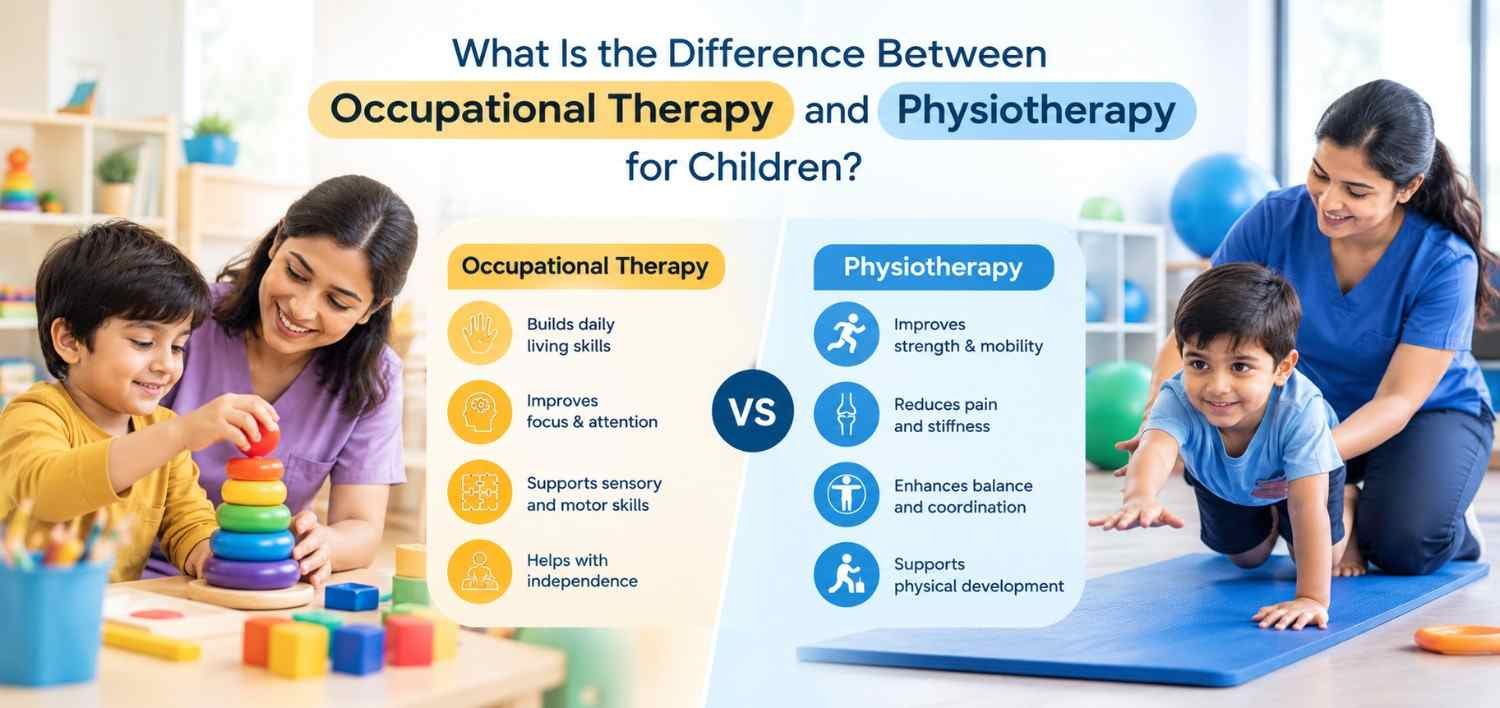
Every child develops at their own pace, but some children may need additional support with movement, coordination, or everyday activities. Parents often come across occupational therapy and physiotherapy while exploring developmental care. Understanding Occupational Therapy vs Physiotherapy can help parents identify the type of support that may benefit their child’s individual needs.
Although both therapies contribute to child development, their goals differ. Occupational therapy focuses on helping children manage daily activities independently, while physiotherapy supports movement, balance, and physical abilities. At Ekam Child Development Centre, understanding these differences can help families make informed decisions about developmental support.
What Is Occupational Therapy for Children?
Occupational therapy for children helps them develop the skills needed to participate in everyday activities at home, school, and during play. These activities include eating, dressing, holding a pencil, using scissors, and following daily routines.
A pediatric occupational therapist works on fine motor coordination, hand strength, sensory processing, and self-care abilities through structured exercises and play-based activities. For example, a child who struggles to hold a spoon, button a shirt, or complete handwriting tasks may benefit from occupational therapy.
The benefits of occupational therapy for kids include improved independence, coordination, and participation in age-appropriate activities. Therapy goals depend on each child’s abilities and specific challenges.
What Is Physiotherapy for Children?
Physiotherapy for children, also known as pediatric physical therapy, focuses on improving movement, posture, muscle strength, balance, and mobility. It supports gross motor skills required for sitting, crawling, standing, walking, running, and climbing.
A pediatric physiotherapist assesses how a child moves and identifies areas that may require support. Depending on the assessment, therapy may include strengthening exercises, guided movements, balance activities, stretching, and therapeutic play.
For example, a child who has difficulty walking independently, maintaining balance, or climbing stairs may benefit from physiotherapy. The benefits of physiotherapy for children include improved physical function, movement control, and participation in everyday activities.
Occupational Therapy vs Physiotherapy: What Is the Difference?
The primary difference between these therapies lies in the skills they address. Occupational therapy helps children perform daily tasks, while physiotherapy concentrates on physical movement and mobility.
Consider a child who experiences difficulties at school. If the child struggles to hold a pencil, use classroom materials, or manage personal belongings, occupational therapy may help develop the necessary skills. However, if the child finds it difficult to walk, maintain posture, or move around safely, physiotherapy may be more suitable.
When looking at the day-to-day objectives, the difference between occupational therapy and physiotherapy for children becomes more apparent. Fine motor skills, sensory needs and independence are frequently the areas of occupational therapy that are targeted. Physiotherapists spend most of their time on gross motor skills, strength, balance and co-ordination.
Depending on the developmental needs of the child, and on the professional assessment, some children may require both therapies.
Fine Motor Skills and Gross Motor Skills in Children
Fine motor skills involve small, controlled movements, particularly those using the fingers and hands. Writing, drawing, picking up small objects, fastening buttons, and using a spoon are common examples. Occupational therapy frequently supports these abilities.
Gross motor skills involve larger muscle groups and whole-body movements. Sitting upright, jumping, running, climbing, and kicking a ball are examples. Physiotherapy often helps children strengthen these skills.
Although the approaches differ, both therapies contribute to overall development. Better balance may help a child participate in playground activities, while improved hand coordination can make schoolwork and self-care easier.
When Does a Child Need Occupational Therapy or Physiotherapy?
Parents may consider a developmental assessment when a child consistently struggles with everyday activities or age-appropriate physical milestones.
Occupational therapy may be helpful when a child experiences difficulty with dressing, feeding, handwriting, sensory experiences, hand coordination, or other daily tasks.
Physiotherapy may be appropriate when a child has persistent difficulties with sitting, standing, walking, balance, posture, or physical coordination.
If you are uncertain about what form of therapy your child should get, seek out a professional. The evaluation takes into account the child’s development background, existing skills, and unique problems. Early evaluation may help families find proper support measures without thinking that every development problem needs intervention.
Can Children Benefit from Both Therapies?
Yes, there are certain children who require both OT and PT. For example, a child with delayed development may require help not only with feeding, dressing, and playing, but also in walking and balancing as well.
If therapists align their techniques, then there will be an effort to have compatible goals in the home setting, school environment, and the community at large. Parents and caregivers are able to support such efforts through practice of the advised activities.
Helping Children Build Confidence and Independence
Understanding Occupational Therapy vs Physiotherapy helps parents recognise that both therapies serve valuable but different purposes. Occupational therapy supports everyday independence, whereas physiotherapy focuses on movement, strength, and physical function. The right approach depends on the child’s individual requirements.
The Ekam Child Development Centre motivates parents to get themselves professionally advised about their developmental problem that is creating hindrances in the life of the kid. If you are looking for an occupational therapist in Hari Nagar or looking for the Best ABA Therapy Centres in Tilak Nagar, then take advice from your child’s development professional.