

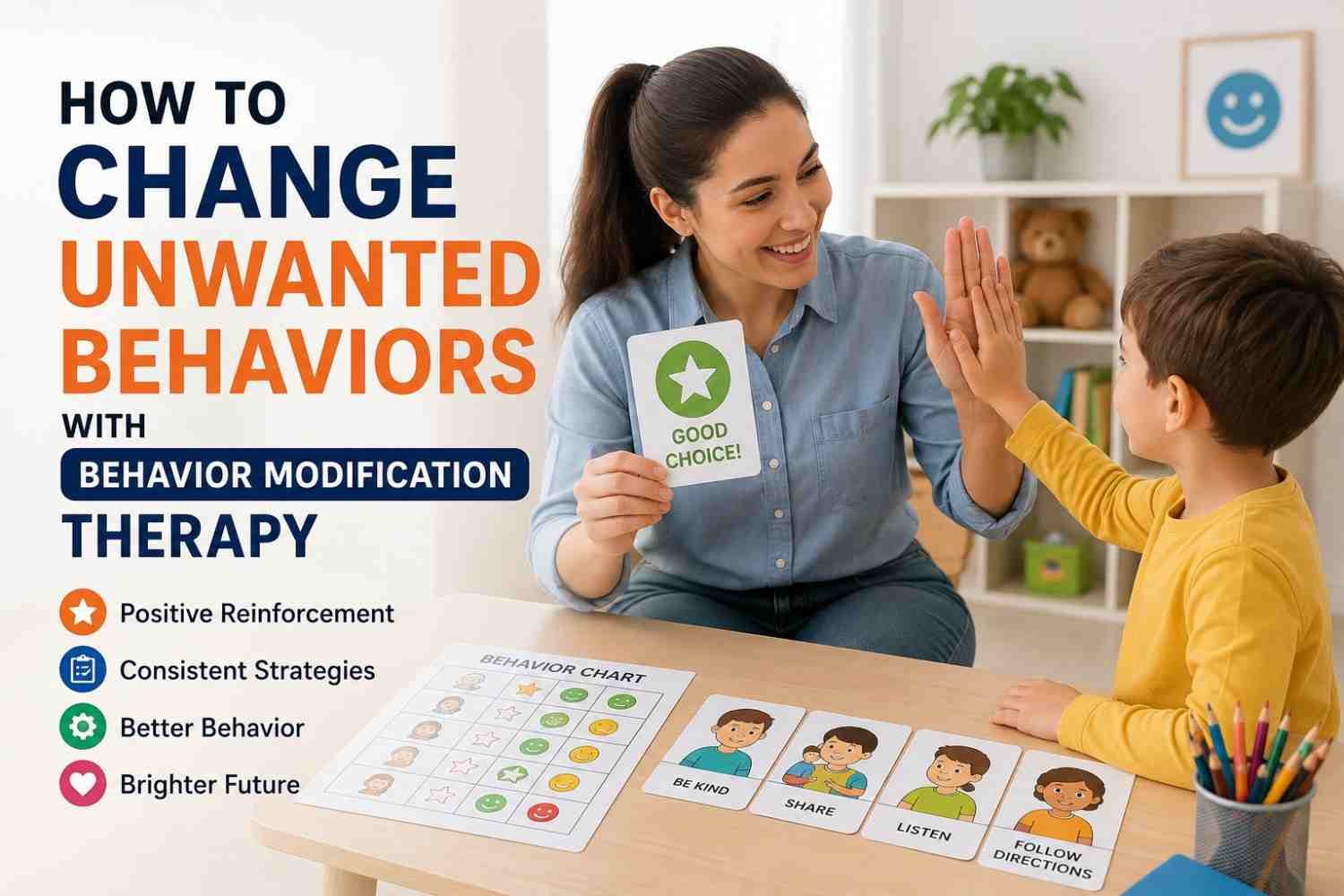
Unwanted behaviors can affect a child’s daily routine, learning, relationships, and overall development. These behaviors may include aggression, frequent tantrums, refusal to follow instructions, difficulty completing tasks, or other actions that create challenges at home or school. Behavior modification therapy is a structured approach that helps individuals understand why a behavior occurs and learn healthier, more appropriate alternatives.
At Ekam Child Development Centre, therapy plans are designed around individual needs, helping children and families work toward positive and meaningful behavioral changes.
What Is Behavior Modification Therapy?
Behavior modification therapy is based on the idea that behaviors can be learned and, therefore, can also be changed through consistent strategies and appropriate support. The therapy focuses on identifying a specific behavior, understanding its triggers, and applying techniques that encourage positive actions.
Rather than simply focusing on stopping a behavior, therapists work to understand what may be causing it. For example, a child may avoid a task because it feels difficult or may display challenging behavior to gain attention. Understanding these patterns is an important first step toward changing unwanted behaviors effectively.
How Does Behavior Modification Therapy Work?
The process of behavior modification therapy usually begins with observing and identifying the behavior that needs attention. Therapists may look at what happens before the behavior, the behavior itself, and what happens afterward.
Once these patterns are understood, appropriate behavior modification techniques can be introduced. These may include setting clear expectations, creating consistent routines, rewarding positive actions, and gradually reducing reinforcement for unwanted behaviors.
The goal is not immediate perfection. Instead, small and achievable improvements are encouraged over time. Consistency from parents, caregivers, teachers, and therapists can make a significant difference in the overall progress.
Effective Behavioral Therapy Techniques
Different children respond to different approaches. Some commonly used behavioral therapy techniques include the following:
Positive Reinforcement
Positive reinforcement therapy involves rewarding a desired behavior so that the individual is more likely to repeat it. The reward may include verbal praise, extra playtime, a preferred activity, or another meaningful incentive.
For example, if a child completes a task without becoming frustrated, acknowledging the effort can encourage the same response in the future. Positive reinforcement helps shift attention toward what the child is doing correctly.
Setting Clear Expectations
Children often respond better when expectations are simple and easy to understand. Clear instructions and predictable routines can reduce confusion and help children know what is expected of them.
Breaking Goals Into Small Steps
Some unwanted behaviors occur when a task feels overwhelming. Breaking activities into smaller, manageable steps can help build confidence and reduce frustration.
These behavior modification techniques focus on gradual progress rather than expecting major changes overnight.
The Importance of Consistency
Consistency is one of the most important parts of behavior modification therapy. If a positive behavior is rewarded one day but ignored the next, it may be difficult for the child to understand what is expected.
Parents and caregivers can support progress by following similar strategies across different environments. When appropriate, therapists may also work with schools or other caregivers to maintain consistency.
A structured approach helps children connect their actions with consequences and develop more positive behavioral patterns over time.
Behavior Modification Therapy and CBT
Cognitive behavioral therapy (CBT) may also be helpful in addressing certain behavioral and emotional challenges, particularly when thoughts and feelings influence actions. While behavior modification therapy often focuses directly on observable behaviors and reinforcement, CBT can help individuals understand the connection between thoughts, emotions, and behaviors.
Depending on individual needs, professionals may use elements of different therapeutic approaches to create a suitable intervention plan.
How Parents Can Support Positive Behavioral Change
Parents play an important role in the success of behavior modification therapy. Some helpful steps include:
- Recognizing and praising positive behaviors.
- Maintaining consistent routines and expectations.
- Avoiding unnecessary attention toward minor unwanted behaviors when professionally appropriate.
- Using simple and clear instructions.
- Tracking progress and celebrating small improvements.
- Working closely with qualified therapists.
It is important to remember that changing unwanted behaviors takes time. Every child develops differently, and progress may occur gradually.
Professional Support for Behavioral Challenges
If behavioral issues regularly impact the child’s education and social interactions or activities in general, professional guidance can aid in the identification of appropriate strategies. A licensed therapist can evaluate the patterns of behavior and suggest personalized methods to modify behavior based on the child’s needs.
If you are looking for Behavior modification therapy in Janakpuri, professional support can help families better understand challenging behaviors and develop practical strategies for encouraging positive change.
Final Thoughts
The therapy for behavior modification therapy provides an organized and supportive approach to dealing with challenging behavior and encouraging positive changes. With regular strategies and positive reinforcement, therapy with clear expectations and individualized support, children will gradually improve their behavior.
The staff at Ekam Children Development Centre, the emphasis is on knowing the needs of each child and encouraging meaningful growth. Through patience, perseverance, and proper direction, positive behavior change is a possibility for parents and children.