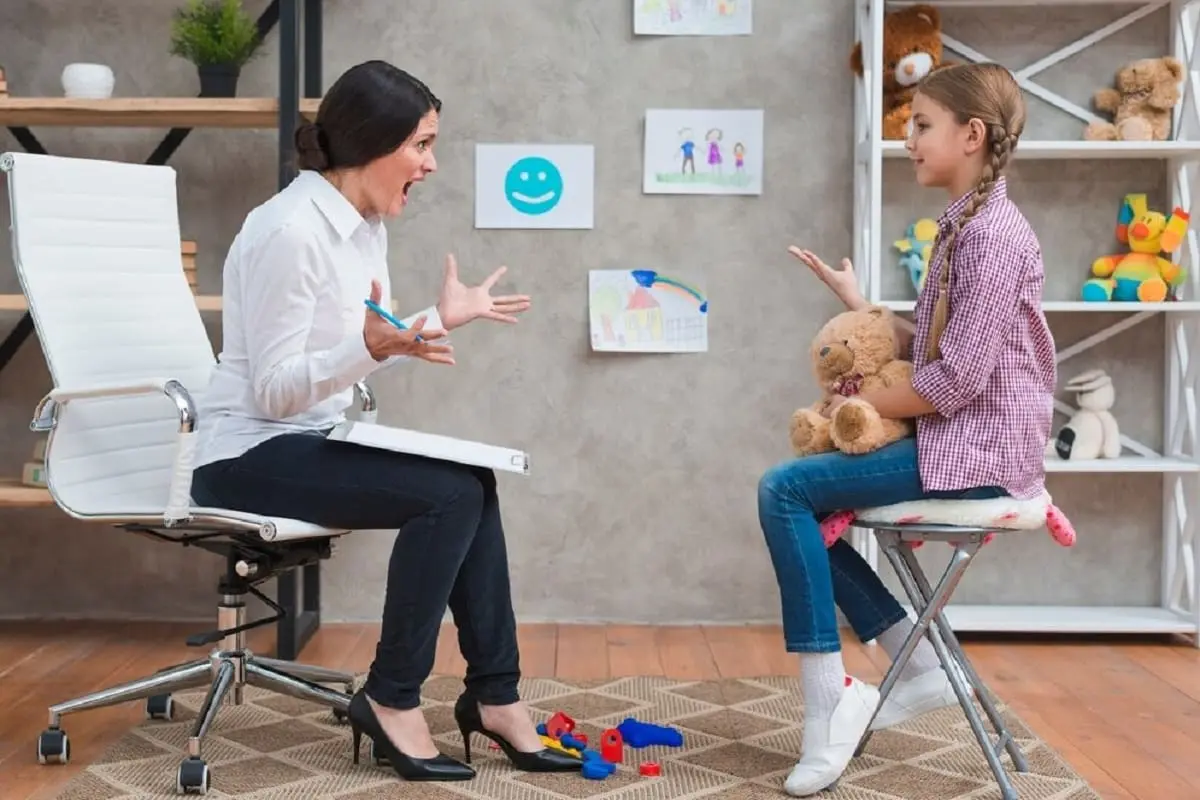
Development of children does not always necessitate expensive toys, elaborate activities or any pre-planned regimen. There are instances where the most significant learning takes place through simple activities conducted within the four walls of the house. With proper guidance, Autism Activities At Home and Autism Development Activities will help your child develop his/her ability to communicate, explore senses and develop skills for independent learning. For those who need professional assistance, Speech Therapists in Hari Nagar, Ekam Child Development Center is a place to go.
All children have their unique style of interpreting the world. Children With Autism may interpret the world in their unique way of communication, sensation, learning, and interest. Therefore, all home activities should not be in the form of an exam or a challenge. The focus should always be on making fun activities that enable the child to explore and learn useful skills.
The Ekam Child Development Centre understands the significance of individualized development. Through proper encouragement and appropriate activities, parents can help transform daily occurrences into something more significant for their children.
Why Are Home Activities Important for Child Development?
Home is frequently an environment that children know well and feel comfortable in. Being comfortable in such an environment helps them learn new things easily and practice their daily skills without undue stress.
The CDC notes that there are different developmental strategies, such as speech and language therapy and occupational therapy, which may be helpful. Also, the NHS stresses the significance of considering the needs of each child, being respectful of sensory needs, and keeping routines familiar to the child.
This means selecting activities that align with the interests and abilities of your child. Here are seven great ideas for you to consider implementing at home.
1. Sensory Play Using Everyday Household Materials
Kids learn about their environment from their senses. The sensory play helps kids to learn about different textures, shapes, colors, and movements in a safe environment.
Preparation of a simple sensory tray is very easy for parents as you may use some basic things from your home like some soft fabric material and some large objects or a water-filled bowl. Let your child touch or move with the objects.
The tactile exploration activities can enhance sensory awareness. The colorful items provide visual stimuli to the senses, while handling the varied materials will help develop coordination and body awareness.
Nonetheless, not every child will necessarily have an equal liking for all sensory experiences. For instance, some children will love playing with water, but some others will be more inclined towards manipulating dry objects. One must always remember this point. Never force any child to manipulate anything he or she dislikes doing.
2. Matching and Sorting Games for Cognitive Learning
However, learning does not have to be conducted through worksheets and classrooms. Household objects can serve as means of learning as well.
Utilize blocks in various colors, pictures, socks or toys. Have the kid match things according to color, shape or size. You can begin with two objects and then gradually increase the number of objects.
Visual matching and sorting games facilitate development of visual perceptions and attention. Furthermore, these games help in acquiring cognitive skills for autistic children because parents can modify the game depending upon the capabilities of their child.
Ensure that you make the instruction easy for him and that he watches you do the activity before you ask him to do it. The needs of individual children are considered at Ekam Child Development Center.
3. Everyday Communication Games
Although communication involves speaking, there is more to communication. For example, babies may use body movement, facial expression, pointing, drawing, sign language, and many other ways of communicating.
Simple activity involves playing with a ball. In this case, you have to throw the ball to and fro from your kid in turns with some breaks in between. At this point, your kid decides if he/she wants to keep playing or not. Another activity would involve giving your kid two favorite toys to choose from.
Games that foster language skills in autistic kids create natural opportunities for them to learn how to take turns and respond without having to speak.
Parents have to understand every form of communication that has importance. It is just as important for children to point or choose pictures as it is for them to verbally answer to communicate their needs.
For any additional help your child might need related to communication skills, a specialist in speech and language can assist in goal setting and other techniques.
4. Practising Daily Living Skills Through Household Tasks
The best ways to develop in such a process occur in mundane housework that needs to be done every day. Even such trivial things as picking up toys, putting clothes in a basket, or washing one’s hands become a way to develop independence.
Take a simple task and break it down into steps. In order for your child to know how to clean up his/her toys, demonstrate how he/she needs to pick up one toy and place it in a box.
You can also use visual aids to depict the order of activities. This would be a great way of instructing children who learn by visualizing things.
These activities are effective in developing functional skills and ADLs. They also improve coordination and sequencing through participation on a daily basis.
Those who need more help can consult an occupational therapist at Hari Nagar regarding the activities which will lead to their independence and involvement in day-to-day tasks.
5. Music and Movement Activities for Body Awareness
Games that include the use of music and physical movement have the ability to transform a dull day into an enjoyable day of learning. Some examples of physical movements include hand clapping, foot tapping, and arm movement.
Choose a favorite song and do actions one by one. Let your child repeat your actions, change them, or just listen to you.
It is possible to roll a soft ball, as well as roll in rhythm with a popular nursery rhyme.
However, the following physical activities, which have been designed specifically for kids on the spectrum, could assist them in learning body awareness, imitative behavior, and self-regulation skills. However, be mindful of your kid’s response to sound and movement. The volume of sound should not irritate or disturb your kid.
Through the Occupational Therapy services offered at Ekam Child Development Centre, families can have an idea on how certain activities are connected to the development of their child.
6. Picture Stories to Encourage Emotional Understanding
Visuals and familiar stories can help kids examine common events and discover different feelings.
Select an illustrated book or pictures that depict some common activities like playing, sleeping, going to the park, or eating. You should use concise and clear sentences in your description.
Another method could be to use visuals depicting emotions such as happiness, sorrow, anger, and surprise. Your child needs to select the picture that he or she knows.
Not all children have to be taught how to show their emotions because there are children who know how to express their emotions through other forms apart from verbal expression such as through drawings.
These tasks may help to express emotions, learn visually and socially. They also offer chances to parents to talk about their experiences in an easygoing environment.
7. Simple Indoor Games With a Predictable Routine
Familiar routines can assist children in knowing what will happen that day. The parents may teach them some games which include puzzles, building blocks, picture matching, and pretending games.
Visual scheduling can make the process simpler. For instance, visual aids will be used to indicate that the first thing will be play time, then snack time, and then a favourite activity.
Try to make any changes slowly and ensure that you give your child sufficient time to adapt. When something is tough, then you should make it easier for your child to do it.
For parents looking to know about their children’s preferences and participation, Sensory Integration Therapy in Dwarka is something that can be considered.
Regular activities can aid in building skills in concentration, sequencing, and managing emotions when making transitions.
How Can Parents Make Home Activities More Effective?
It is not enough to introduce an activity. Equally important is how the parents interact with their children during play and in their daily activities.
A few simple practices can make these experiences more comfortable and meaningful:
- Pick topics your child already knows about but include new things gradually.
- Provide proper instructions and demonstrations wherever necessary.
- Focus on efforts rather than on being perfect.
- Remember to consider breaks and do not overwhelm your child.
- Collaborate with professionals regarding developmental objectives and activities selected.
Remember that children do not develop in the same manner. Some children may have a preference for sorting objects according to color, some will be into music, while others would enjoy drawing.
It’s fine to be consistent, but don’t do so to the point where you are making having fun with the family something they have to do.
Frequently Asked Questions About Children With Autism
1. What activities can parents do at home to support a child with autism?
Parents can introduce sensory play, picture matching, storytelling, building blocks, sorting games, and turn-taking activities. These activities can support communication, cognitive development, motor coordination, and social interaction.
2. How does sensory play help children with autism?
Sensory play allows children to explore different textures, sounds, movements, and materials. It can encourage sensory exploration, coordination, and engagement while helping parents understand their child’s sensory preferences.
3. How can parents improve communication skills in children with autism at home?
Parents can use picture books, visual cards, simple instructions, gestures, interactive games, and everyday conversations to encourage communication. Children should be given enough time to express themselves without pressure to speak.
4. When should parents seek professional help for a child with autism?
Parents can consult developmental professionals when they have concerns about their child’s communication, social interaction, sensory responses, behaviour, or daily living skills. Professional guidance can help identify individual developmental needs and suitable therapy approaches.
Final Thoughts on Supporting Your Child’s Development at Ekam Child Development Centre
It is possible that children will learn from little things if the parents understand what the child likes, and the abilities and requirements of the child. The most crucial part is to give Children With Autism an atmosphere where they can express freely.
Developmental aid can be achieved in different ways at Ekam Child Development Centre, which include speech and language therapy, occupational therapy, sensory integration therapy, and early intervention. The professional services at this centre can help parents set development goals for their kids.
For any professional guidance, check our Google Business Profile for further details on Ekam Child Development Centre, reviews by parents, and even locate us. Please get in touch with us to learn more about the developmental needs of your child and services offered by us.